
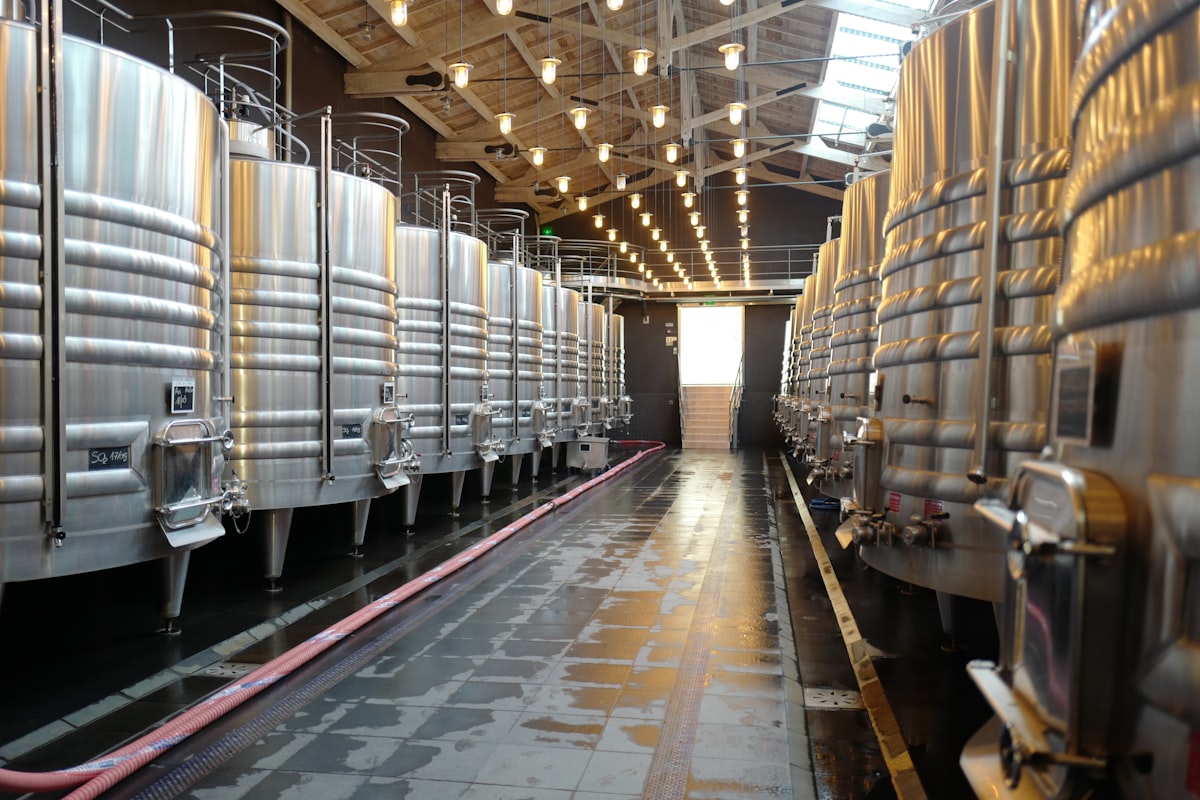
Hey folks. If you run a small brewery in Ontario and your long-term disability insurer just denied a claim—or cut you off after the two-year mark—the letter can feel like the whole problem. It is not. Rent, grain contracts, taproom payroll, and loan covenants do not pause because benefits stopped. Ontario’s craft sector is built on owner-operators who still haul kegs and stand on the canning line; when that person is sidelined, the hidden bill is operational, not just personal. If you are fighting a denial or an own-occupation dispute, working with a disability lawyer Toronto who handles LTD cutoffs is a different job than calling your broker. This piece is about the brewery side of that math—not legal advice.
You stopped drawing LTD. You did not stop owing the brewery.
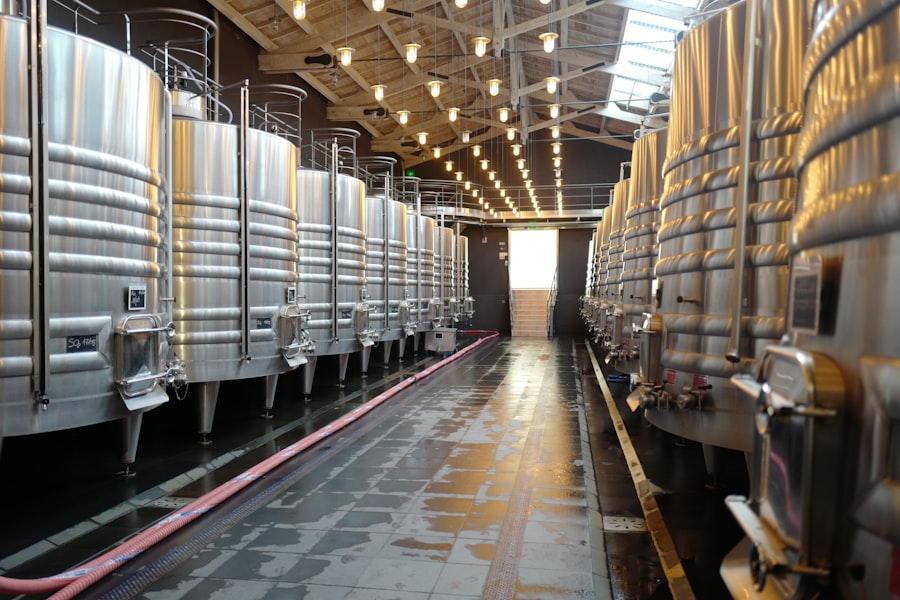
Keg fleet and cold storage do not care who is on disability leave. Returns, fills, and deposits still hit the ledger.
The first line item is rarely the last one
When benefits end, most owners fixate on the monthly LTD payment they expected. That number hurts. It also flatters the total.
In Ontario, the Ontario Craft Brewers association represents more than 150 small, independent bricks-and-mortar breweries—many family-owned, capped at 400,000 hectolitres of worldwide production, with the majority of Ontario sales brewed in-province. Provincial data cited by Ontario’s food and beverage sector profiles put craft beer at roughly 11% of beer volume sold in the province, with hundreds of breweries and thousands of full-time-equivalent jobs tied to the segment. Bricks-and-mortar craft brewers average about a dozen employees; the owner is often one of them on the floor.
South of the border, the picture rhymes. The Brewers Association’s 2024 industry figures describe a market already under margin pressure: craft production fell about 4% to 23.1 million barrels while retail dollar value rose only modestly, closures outpaced openings for the first time since 2005, and small brewers face rising ingredient, packaging, and equipment costs. In either jurisdiction, a “handled” disability dispute can hide months of slow bleed if you stop counting at the benefit line.
Think in chains, not spikes. A denied LTD claim might show up as $0 in monthly benefits on a household spreadsheet. Add taproom shifts you cover with overtime because the head brewer is out. Add a contract cellar hand at $35–$45 an hour because nobody else can run the brewhouse schedule. Add a rushed consultant to keep wholesale accounts from walking. Add interest on the line of credit you draw because revenue dipped but utilities did not. None of those lines say “disability” in QuickBooks. They still land on the same bank account.
That is the brewery version of what long-term disability guides describe for other skilled trades: the initial denial gets attention; the wage gap, treatment costs, and “you could work somewhere else” argument do not—until month six or month twenty-four.
Where “standard” coverage and contracts run out
Breweries rarely have one policy that covers a bad year end to end. You might carry general liability, property, product recall endorsements, equipment breakdown, and business interruption. Each has a deductible, a reporting window, and exclusions that only make sense if you read them before you need them.
Personal LTD is not business interruption. Group long-term disability through work—or a private policy—replaces income when you cannot perform your job under the policy’s definition. It does not automatically pay the brewery’s rent or replace your production labor. Business interruption responds to insured property events on a schedule you negotiated separately. Owners who assume “I’m covered” because they have both policies often discover the brewery claim and the personal claim live in different files with different proof standards.
Policy definitions behave like caps. Most Canadian group LTD policies pay under an own occupation test for an initial period—commonly 24 months—meaning you must be unable to perform the essential duties of the job you held when you became disabled. After that window, many policies switch to any occupation: you must show you cannot perform any job you are reasonably suited for by education, training, and experience. Insurers frequently use that transition to terminate benefits. For a brewery owner, “any occupation” is not abstract. An insurer may argue you could sit at a desk—even if that desk is not brewing, not managing cellar QC, and not covering the taproom on a Friday night.
Product contamination and recall insurance are the headline brewery cases. Insurance may respond if you meet notice requirements and can show lot-level traceability. If your records tie consumption to batches loosely—or not at all—you are negotiating from guesses. Keg fleet contracts are quieter. A lost or damaged keg is not always “the cost of a keg.” It can be a deposit, a replacement fee, and freight both ways while your wholesaler waits on a SKU nobody is scheduling because the owner is off the floor.
Even routine regulatory limits behave like caps on the operations side. In the United States, the TTB distinguishes a loss—a known event such as breakage, spillage, or theft—from a shortage disclosed when physical inventory does not match records. Losses are not taxed when properly documented. Shortages can carry tax exposure and demand explanation under penalty of perjury. The label on the form changes the tax bill—whether or not you are personally on LTD.
Hidden cost categories brewers actually feel
Income replacement, brewery edition. Taproom-first models live on margin per pour. When the owner-operator disappears for twelve weeks, you do not lose only their salary. You lose the person who spots a stuck fermentation, who approves a substitution on the board, who closes the distributor call at 4 p.m. Dollar sales can hold steady in a soft volume year while barrels fall; an empty leadership chair works the other way on your P&L.
Treatment ceilings on “minor” problems. In disability claims, insurers sometimes treat chronic pain, mental health conditions, or PTSD as manageable enough that you should return to some form of work. In brewing, the equivalent is treating 3–5% packaging variance as rounding error while the owner is not watching the line. Craft Brewery Finance frames inventory as often the largest asset on the balance sheet and the biggest source of hidden margin leaks. Three percent of a 30-barrel packaging run is roughly one barrel—about $400–$800 in saleable beer at typical craft pricing, before you count the cans and lids you already bought. Run that every week without the person who cares about yield and you have a self-imposed ceiling.
Burn rate on recovery. Hiring cover brewers costs the same labor twice: their wages plus the owner’s unpaid time fighting the insurer. If you need an outside lab test or a rush hop shipment because decisions slipped, those invoices arrive after the denial letter is mentally “closed.” Ten hours of contract labor plus rush freight plus a label reprint can approach a month of LTD benefits you never received. Track the recovery project like a batch, or it will never show up in batch costing.
Household disruption, taproom edition. When production falls behind, taproom managers improvise: substitute SKUs, discount to move volume, call in extra bar staff. Child-care-scale logic applies to small teams. Someone covers the packaging line Saturday because the scheduled brewer is on the phone with the adjuster. Those hours rarely flow back to the disability file that caused them.
Uninsured gaps. Keg deposits, shrink in transit, and untracked samples sit in the same bucket as policy exclusions on LTD: real limits you only notice when the asset does not come home or the benefit does not restart. If your ledger says 120 half-barrels out and your physical count says 112, eight kegs are a fleet problem before they are an accounting adjustment—and nobody is on the floor to fix the count.
The costs that keep compounding
The underpriced losses are indirect and they stretch—especially when leadership is absent.
Finished beer sitting in tank past its window ties up working capital. Hops bought for a schedule the owner never finished age in the cooler while a substitute brew pulls from the wrong lot because nobody enforced first-expired-first-out. Crafted ERP’s inventory guidance puts the pattern plainly: expired hops lose value and impact; yeast past viability gets tossed; over-purchasing to avoid stockouts leaves older lots unused because rotation is informal. Each item is small. Together they are a second incident riding the first.
Recall readiness adds another layer. If a quality issue touches packaged goods, you need lot linkage from receipt through batch through package. Without it, “destroy the suspect cases” becomes “destroy everything we are not sure about.” Weak operators do not always get a slow fade; sometimes one bad event meets thin cash reserves while the person who understands the system is not in the building.
Staff morale and customer trust compound more slowly than keg fees, but they show up in overtime, turnover, and reviews that mention “half the menu was out.” Insurers sometimes argue a claimant can perform lighter duties; breweries see a lighter version when one unexplained variance teaches the team that numbers are optional because nobody is checking. The second count goes wrong faster than the first.

An empty taproom on a night you planned to be open. Fixed costs and marketing commitments do not wait for LTD appeals.
Evidence changes money—twice
Paperwork is not admin trivia. It decides whether an LTD claim survives a definition change and whether a brewery event is a documented loss, a taxable shortage, or a story you tell at month-end.
On the disability side: Most Ontario group policies move from own occupation to any occupation around the 24-month mark. Legal guides on long-term disability claims in Ontario stress that insurers often become more active at that stage—requesting functional capacity evaluations, surveillance, and vocational opinions that you could work in another role. Miss a deadline, submit incomplete medical forms, or let your file describe “back pain” without tying symptoms to the physical duties of brewing, and entitlement for a period can vanish. Chronic pain, mental health conditions, and complex diagnoses need documentation that matches how you actually spend your day: lifting, climbing, cold exposure, long stands, repetitive keg work.
On the brewery side: In the U.S., federal rules require monthly physical inventory of beer, with records showing date, quantity on hand, losses, gains, shortages, and a signature under penalty of perjury. Daily operational records must reflect production, removals, returns, destructions, and losses. Retention is at least three years. TTB audit guidance repeatedly flags breweries that net shortages against production on the Brewers Report of Operations without reconciling cellar logs, tank readings, and packaged inventory separately.
The parallel is boring on purpose. In a brewery, miss the linkage between a spill on Tuesday and the adjustment logged Friday and you inherit an unexplained shortage on line 31 instead of a loss on line 30—with different tax treatment and a harder conversation with an auditor. While you are off the floor, a stand-in team posting generic “inventory adjustment” entries is the operational equivalent of a generic medical note in a claims file: it does not help you anywhere that matters.
The best evidence bundle spans both worlds:
- Medical records and functional assessments tied to real job duties (not a generic “unable to work”)
- LTD correspondence and policy definitions saved with dates
- Lot tags on grain and hops tied to batch consumption events
- Knockout volumes, transfers, and packaging input/output with waste categories
- Keg send/receive logs with customer or route identifiers
- Distributor correspondence and credit memos tied to batch or package date
- Photos and timestamps for equipment failures that caused loss
If a count disagrees with the ledger, the adjustment should not be step one. Document the variance, walk recent movements, assign a root cause, then post with a reason code.
The two-year wall and why “any job” breaks a brewery owner
Here is the synthesis that matters for Ontario owner-operators—and for U.S. readers with similar policy language in private plans.
For the first tranche of a claim, the question is whether you can do your job: brew, package, manage cellar QC, run the taproom you built. After the own-occupation period, the question becomes whether you can do any job you are suited for. Insurers often answer that second question with vocational reports and surveillance—not with an understanding that your “occupation” is also capital equipment, brand relationships, and a license to operate.
National U.S. production data and closure trends say margin is already thin. Ontario craft data say teams are small and local. TTB record rules say the follow-on question will be documentary, not emotional. Inventory specialists say leaks are continuous, not catastrophic. Put those four together: the expensive year is usually the one you thought ended when the denial letter arrived. Pre-incident review beats post-incident heroics. Know your LTD definitions before injury. Document physical duties while you are healthy. Separate personal disability from business interruption. Verify whether your batch logs would let a trusted employee run production for ninety days without you.
Denials, delayed claims, and cutoffs after the definition change are common enough that specialists exist for a reason. The brewery hidden cost is usually a chain of capped definitions, delayed evidence, insurer tactics, and ordinary operating expenses that keep running after the benefit stops.
What to do before the next bad Monday
You cannot eliminate injury, chronic pain, or mental health crises. You can reduce the second bill on both fronts.
Review LTD and business policies on a calendar, not after the event. Log packaging waste and keg movements as part of production, not as month-end cleanup. Reconcile counts with movement history before you adjust numbers. Tie marketing promises on labels—dates, ABV, style—to batch records so a quality question does not become a compliance scramble while you are on leave.
Train a backup who can post transfers and losses with reason codes. Most owners budget for ingredients. Few budget for contract labor to cover the brewhouse, taproom substitution, or the cost of getting medical and production paperwork slightly wrong at the same time.
Works cited
Brewers Association, “Brewers Association Reports 2024 U.S. Craft Brewing Industry Figures.” https://www.brewersassociation.org/association-news/brewers-association-reports-2024-u-s-craft-brewing-industry-figures/
Ontario Craft Brewers, “About.” https://ontariocraftbrewers.com/about/
Government of Ontario, “Breweries: NAICS 31212” (2021 Food and beverage sector profiles). https://www.ontario.ca/document/2021-food-and-beverage-sector-profiles/breweries-naics-31212
U.S. Alcohol and Tobacco Tax and Trade Bureau, “Requirements for Brewery Operations” (recordkeeping overview; 27 CFR Part 25). https://www.ttb.gov/business-central/requirements-brewery-operations
TTB, “Part 4 – Records” (presentation PDF: daily records, monthly inventory, losses vs. shortages, retention). https://www.ttb.gov/system/files?file=images%2Fpdfs%2Fpresentations%2Fpart4.pdf
Craft Brewery Financial Training, “How to Build a Profitable Inventory System.” https://craftbreweryfinance.com/how-to-build-a-profitable-inventory-system/
Crafted ERP, “Brewery Inventory Management: From Raw Ingredients to Finished Goods.” https://craftederp.com/the-buzz/brewery-inventory-management
Mondaq, “A Comprehensive Guide To Long-Term Disability Claims In Ontario.” https://www.mondaq.com/canada/discrimination-disability-sexual-harassment/1511342/a-comprehensive-guide-to-long-term-disability-claims-in-ontario
Batch-level traceability and loss logging are what let a stand-in team keep production honest while the owner fights a claim—not a substitute for disability counsel, but the difference between a paused brewhouse and a slow-motion shortage. BrewLedger ties consumption, packaging, and adjustments to batches—see how it works when you are ready.